
Look, dive watches don’t usually surprise me anymore. Most brands just swap a dial color and call it a day. But Tissot’s latest move with the Seastar 2000 Professional caught my attention for a reason that has nothing to do with marketing fluff: they actually shrunk the case while keeping every bit of the hardcore engineering intact.
That’s rare. And it’s worth talking about.
Table of contents
What’s Actually New Here
Five fresh references just dropped, and they span a proper color palette this time. Deep blue, bright orange, stormy grey. Two of them get a black PVD coating for that stealthier look divers tend to gravitate toward. The Tissot Seastar 2000 Professional first showed up back in 2021, and it built a reputation fast as one of the few watches under the one-lakh mark in India offering genuine technical diving credentials.
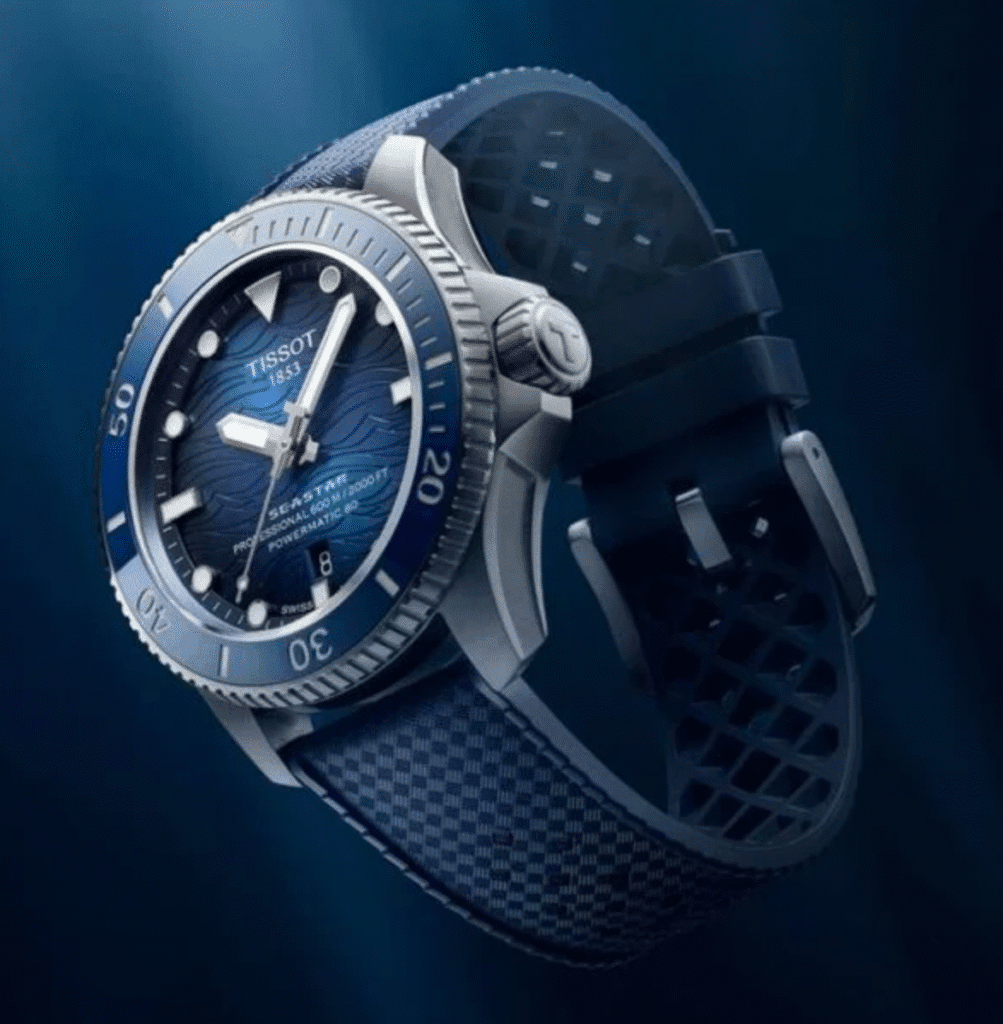
So what changed for 2026? The case went from 44mm down to a tighter, more wearable footprint, shaving off height too. If you’ve ever strapped on the older Seastar 2000 and felt like you were wearing a hockey puck, this update should feel noticeably better on the wrist.
The Specs That Actually Matter for Divers
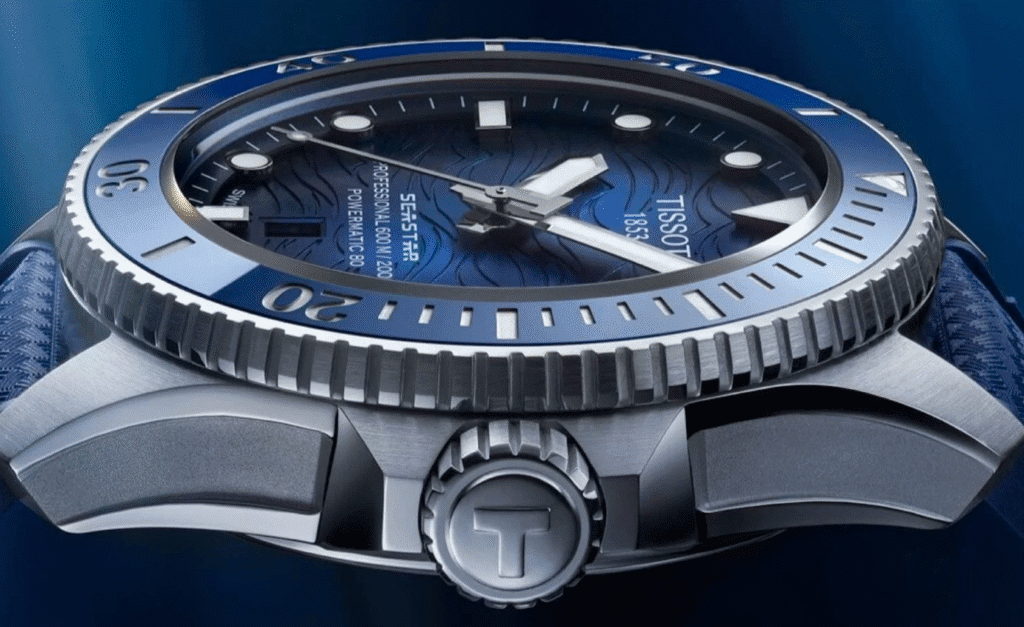
Here’s where Tissot stopped messing around. The watch carries ISO 6425 certification (the 2018 standard, for those keeping score), and it’s water resistant to a genuinely useful 600 metres, or 2000 feet if you prefer imperial. That’s not a marketing number either. It’s backed by a helium escape valve at the 9 o’clock position, a feature you’d normally expect on watches costing two or three times as much.
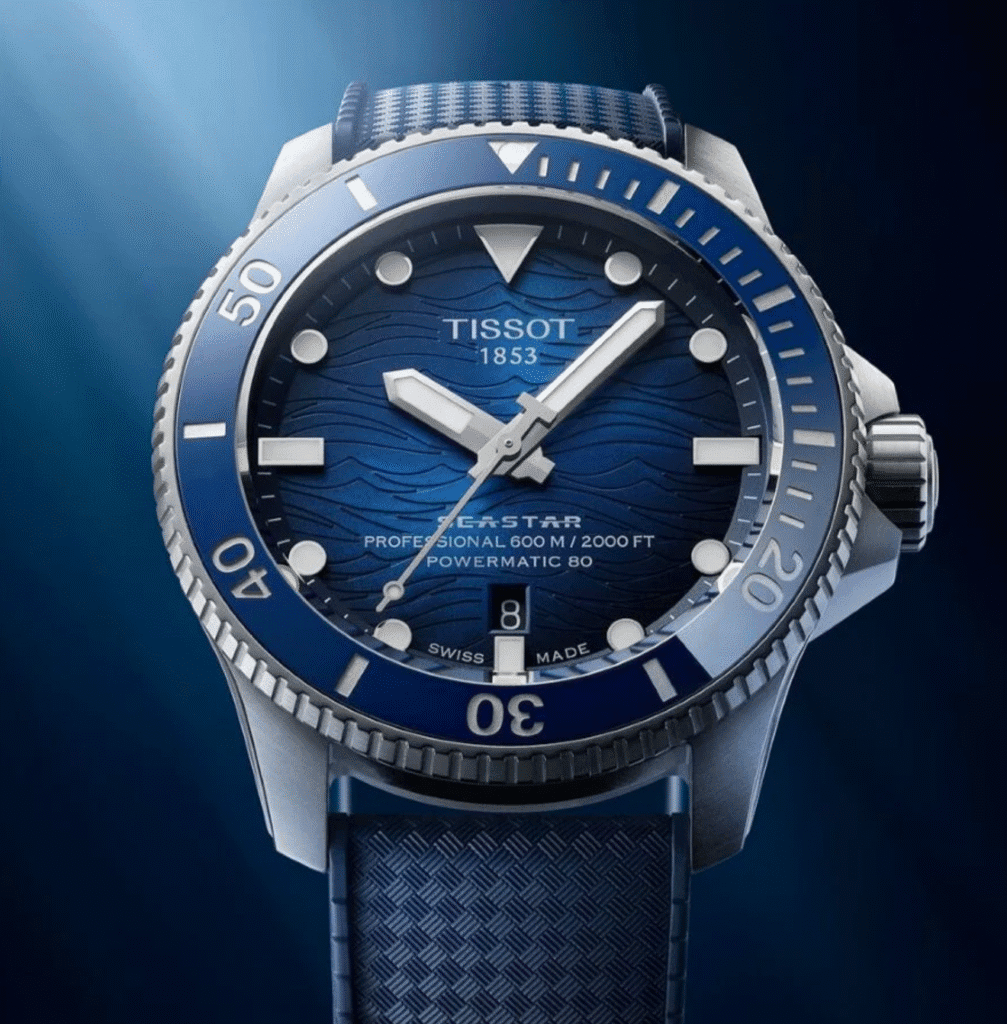
Why does that valve matter? During saturation diving, helium molecules sneak into the watch case. Without an escape route, that trapped gas can literally pop the crystal off the case when you decompress. Tissot solved that problem properly here, not as an afterthought.
| Feature | Specification |
|---|---|
| Case diameter | 44mm (down from 46mm) |
| Case material | 316L stainless steel |
| Water resistance | 600m / 60 bar / 2000ft |
| Certification | ISO 6425 (2018) |
| Movement | Powermatic 80 (Nivachron balance spring) |
| Power reserve | 80 hours |
| Bezel | Unidirectional, ceramic insert |
| Crystal | Domed sapphire, anti-reflective coating |
| Strap system | Interchangeable steel bracelet and rubber |
The Powermatic 80 movement deserves a mention too. It’s essentially a heavily reworked ETA 2824-2, fitted with a Nivachron balance spring that resists magnetism far better than standard alloys. You get 80 hours of power reserve, which means you could leave this watch sitting on a shelf over a long weekend and it’ll still be ticking when you pick it back up.
Pricing: What This Means for Indian Buyers
Now here’s the part everyone actually wants to know. Internationally, the new 44mm references start around EUR 975 for rubber strap versions, climbing to roughly EUR 1,025 for the black-coated models. Converted and adjusted for Indian import duties, expect official Tissot India boutique pricing to land in a similar zone to the existing Seastar 2000 lineup.
For reference, the current 46mm Tissot Seastar 2000 on a steel bracelet retails at ₹131,500 on Tissot’s official India site, GST included. The new 44mm references should sit close to that mark, possibly a touch lower given the size reduction, once they officially land in Indian boutiques.
If you don’t want to wait for the new references to hit Indian retail and you’re shopping today, the existing Seastar 2000 Professional models are already available and worth a look:
Tissot Men’s Seastar 2000 Professional Powermatic 80, Black PVD Case, Rubber Strap is available here: Check price on Amazon
Tissot Seastar 2000 Automatic Men’s Watch (T1206071104101) is available here: Check price on Amazon
If you’d rather browse the full Seastar range and compare options yourself, this search link pulls up everything currently listed: Browse Tissot Seastar watches
Design Details Worth Knowing Before You Buy
The dial treatment is genuinely striking. Tissot went with a graded wave pattern that mimics actual water movement, and the Swiss Super-Luminova coating on the hands and indexes means legibility holds up whether you’re at the surface or thirty metres down in murky water. I’d call this a small thing, but honestly, readability is the entire point of a dive watch. Get that wrong and nothing else matters.
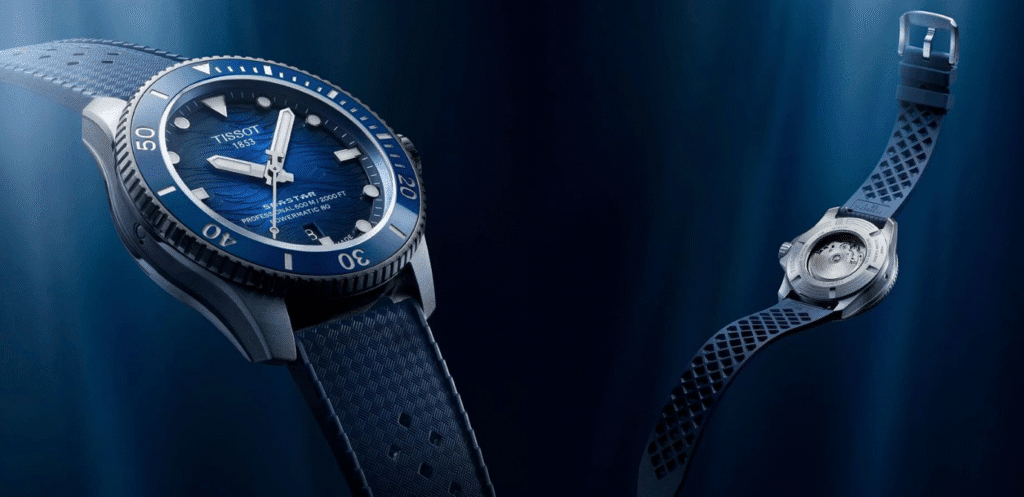
The strap situation is flexible too. Every reference ships with Tissot’s interchangeable system, letting you swap between the steel bracelet (now with a diver’s clasp, security lock, and push-button extension) and a tropic-style rubber strap built for actual water exposure. One watch, two completely different personalities depending on what you’re doing that day.
Should You Wait or Buy Now
Here’s my honest take, and I’ll keep it simple. If you need a dive watch right now and the existing Seastar 2000 Professional fits your budget, buy it. The specs haven’t changed dramatically. You’re still getting the helium valve, the ISO certification, the 80-hour power reserve.
But if size was your hangup with the older 46mm case, waiting for the new 44mm references to land in Indian boutiques makes sense. A smaller case radically changes how a watch wears day to day, especially if you’ve got a smaller wrist or you’re transitioning this watch from pool duty to office duty.
Either way, this is one of the rare segments where Tissot genuinely competes above its price bracket. Citizen and Seiko are usually the names that come up in this conversation, and for once, Tissot isn’t just keeping pace. It’s arguably ahead.