
OPPO has just pulled back the curtain on the Reno16 Series for India, and the headline act here is something the brand has never tried before on a Reno phone: a back panel that genuinely looks three dimensional. The series leans on OPPO’s new HoloVerse 3D Design, paired with a fresh AI Snap Key that makes its debut on the Reno line. Between the visual trickery and the AI shortcuts, this is clearly OPPO’s attempt to make the Reno series feel new again, not just incrementally updated.
The OPPO Reno16 Series will be available in Starry White, Twilight Violet, and Stellar Purple, with the standout 3D effect reserved exclusively for the Starry White variant.
Table of contents
A 3D Design You Can Actually See Move
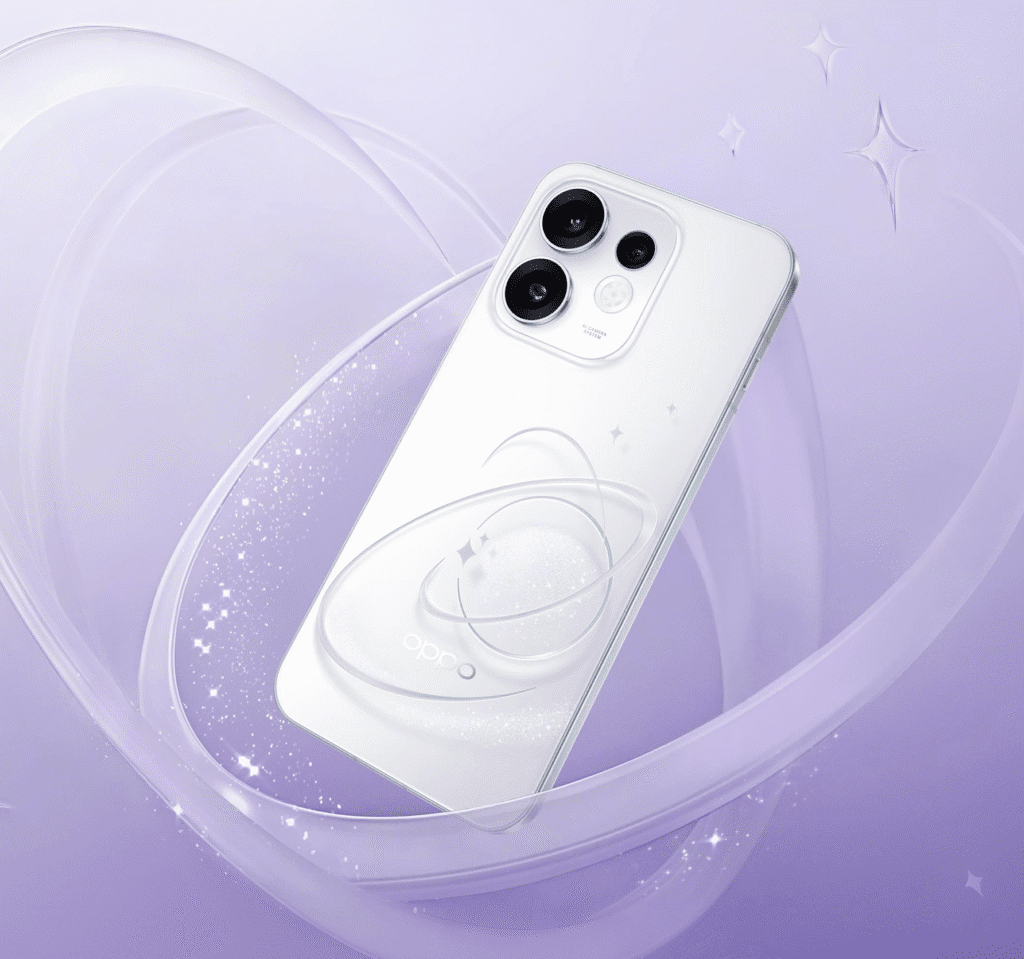
Most phone backs play with colour and texture, but they stay flat. OPPO wanted to break that rule with the 3D Pop Planet Design, found only on the Starry White Reno16. Look at it dead on, then tilt it, and a celestial planet appears to float just beneath the glass. It is a proper naked eye 3D effect, not a printed illusion.
The trick lies in a dual layer optical structure: a graphic layer sits beneath a precision engineered microlens array built from tens of millions of microscopic lenses. Light hits these lenses differently depending on the angle, which is what creates that floating, stereoscopic depth as you move the phone around. It is the kind of detail you have to see in person to fully appreciate, but on paper, it is a genuinely novel approach to smartphone design.
Rounding off the look is OPPO’s Floating 3D Glitter finish and a Dynamic Stellar Ring around the camera module, both adding shimmer and a bit of visual flair without overdoing it. The whole back panel is built using a seamless one piece cold sculpted process, which should also help with in hand feel and long term durability.
Compact Build, Big Screen Real Estate
OPPO clearly read the room on phone sizes. The standard Reno16 packs a 6.32-inch AMOLED display into a body that keeps bezels down to just 1.6mm, hitting a 93.4 percent screen to body ratio. That is a genuinely tight bezel for this price segment. You get FHD+ resolution and a smooth 120Hz refresh rate, so scrolling and video both look sharp.
The Reno16c goes slightly larger with a 6.57-inch AMOLED panel, also at FHD+ resolution with 120Hz refresh, aimed at buyers who want more screen for binge watching or gaming without stepping up to a bulkier device.
Despite the bigger displays, neither phone feels like a brick. The Reno16 comes in at 8.22mm thickness and 182g, while the Reno16c sits at 8.44mm and roughly 195g. For daily carry, especially for students and people who are on their phones constantly through the day, that weight difference matters more than the spec sheet suggests.
Outdoor visibility has been addressed too. The Reno16 reaches a peak brightness of 1,800 nits, and the Reno16c tops out at 1,400 nits, both of which should keep content readable under harsh Indian summer sunlight.
AI Snap Key: A New Shortcut Button Worth Talking About
This is the feature OPPO is clearly betting on to differentiate the Reno16 from its predecessors. The AI Snap Key is a dedicated side button that puts AI tools one press away.
Here is how it behaves in practice:
| Action | Function |
|---|---|
| Single press | Save on screen content to Mind Space |
| Long press | Record a quick voice note |
| Double press | Launch Mind Space instantly |
The button is also customisable, so if you would rather use it for the camera, flashlight, translator, or voice recorder, you can reassign it. The bigger play here is Mind Space, which bundles Gemini, Perplexity, and ChatGPT into a single interface, paired with OPPO’s AI Mind Pilot. The idea is to let users research, compare answers across models, and pull up saved content without juggling three different apps. Whether this becomes a daily habit or a gimmick that gets ignored after week one will depend entirely on how smooth the execution feels in real use, but the concept itself is sound.
Built to Survive More Than Just Drops
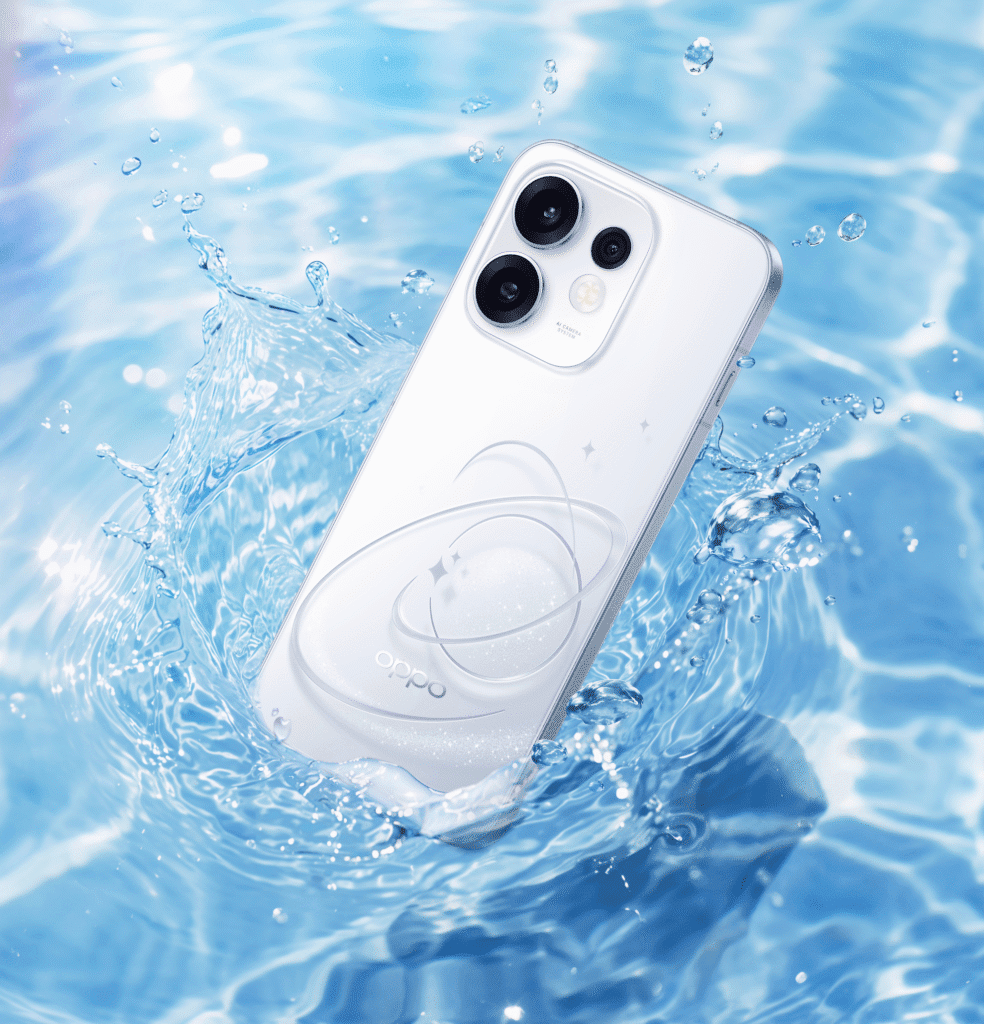
OPPO has pushed durability hard on this series. The Reno16 Series carries IP66, IP68, IP69, and IP69K certifications, which is about as comprehensive as water and dust resistance gets on a consumer phone right now. That covers splashes, dust ingress, submersion up to 1.5 metres for 30 minutes, and resistance to high pressure, high temperature water jets.
The Aerospace-Grade Aluminium Frame on the Reno16 is rated for 200 percent higher yield strength and 36 percent better drop resistance compared to a standard plastic frame. Add Splash Touch and Glove Touch support, and the display stays responsive even with wet hands or gloves on, which is a small but genuinely useful touch for anyone shooting content in the rain or working outdoors.
Specifications at a Glance
| Feature | OPPO Reno16 | OPPO Reno16c |
|---|---|---|
| Display | 6.32-inch AMOLED, FHD+, 120Hz | 6.57-inch AMOLED, FHD+, 120Hz |
| Peak Brightness | 1,800 nits | 1,400 nits |
| Thickness | 8.22mm | 8.44mm |
| Weight | 182g | 195g |
| Build | Aerospace-Grade Aluminium Frame | Standard frame |
| Durability | IP66, IP68, IP69, IP69K | IP66, IP68, IP69, IP69K (series-wide) |
| Special Feature | AI Snap Key, 3D Pop Planet Design (Starry White only) | AI Snap Key |
| Colours | Starry White, Twilight Violet, Stellar Purple | Starry White, Twilight Violet, Stellar Purple |
Price and Availability in India
OPPO has not officially announced India pricing or the exact sale date for the Reno16 Series at the time of writing. Industry reports point to an India launch around early July 2026, with the standard Reno16 expected to sit somewhere in the premium mid-range bracket.
Check OPPO Reno16 Series price on Amazon
Thoughts
The 3D Pop Planet Design is the kind of feature that either becomes a genuine talking point in showrooms or fades into the background once the novelty wears off. Either way, it is a refreshing change from the usual gradient finishes that every brand seems to ship these days. The AI Snap Key feels more immediately useful, assuming OPPO’s software keeps it snappy rather than turning it into another bloated AI menu.
What stands out most is the durability stack. IP66, IP68, IP69, and IP69K together on a mid-range Reno phone is not something competitors are matching easily. If OPPO prices this sensibly, the Reno16 Series could end up being one of the more compelling design-led launches in India this year.