
Your smartwatch just learned to read your blood pressure without a cuff ever touching your wrist. That is the pitch Google is making with the Google Pixel Watch 5, which touched down in India on August 12, 2026, alongside the Pixel 11 series. Google is calling it its most advanced health and wellness wearable yet, and after digging through the specifications, the claim holds up better than most marketing lines do.
The main highlight is Health Guardian, a bundle of passive health-tracking tools that includes blood pressure trend monitoring and insulin resistance tracking, features that were previously the domain of clinical devices, not consumer watches. Here is a full breakdown of what the Pixel Watch 5 brings to Indian buyers, what it costs, and whether the upgrade from older Pixel Watches is worth chasing.
Table of contents
- Google Pixel Watch 5 Price in India and Launch Date
- Health Guardian: What Blood Pressure and Insulin Resistance Trends Actually Do
- Design, Display and Battery Life
- Performance and Gemini Intelligence
- Fitness Tracking: The Biggest Upgrade Beyond Health Guardian
- Pixel Watch 5 vs Pixel Watch 4: What Actually Changed
- Our Take
Google Pixel Watch 5 Price in India and Launch Date
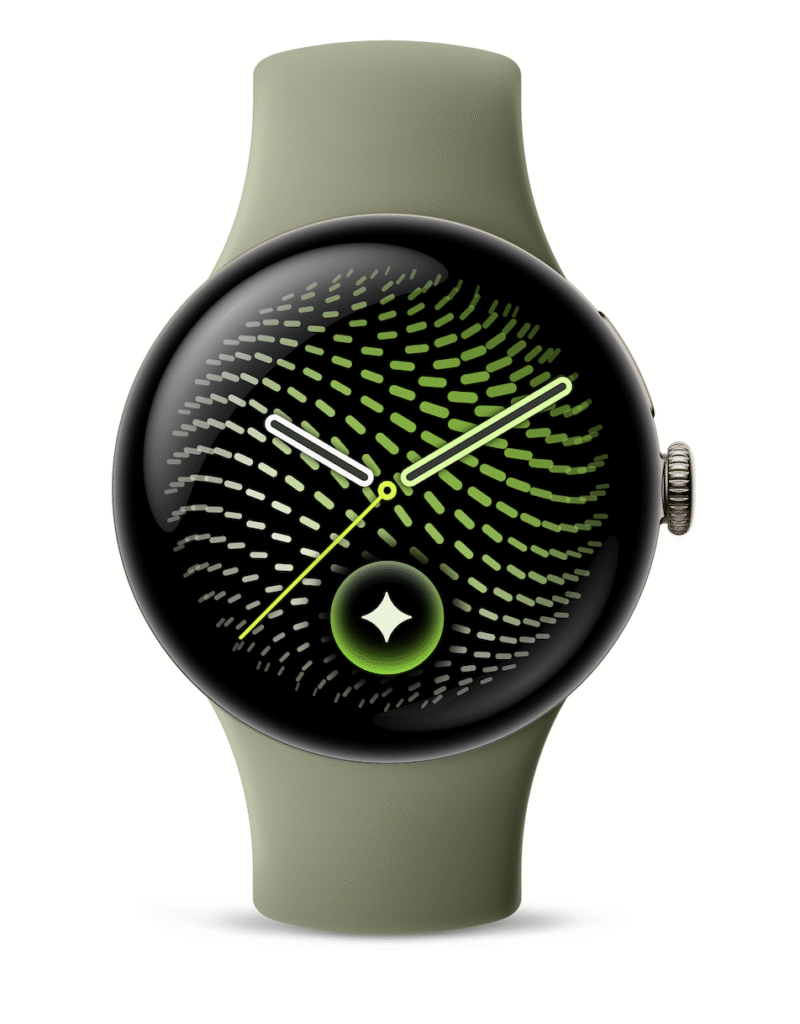
The Pixel Watch 5 arrived in India on the same day Google unveiled the Pixel 11 lineup globally, a faster India rollout than Google has managed with past Pixel Watch generations. Pricing in India lands as follows.
| Variant | Connectivity | Price in India |
|---|---|---|
| 41mm | Wi-Fi | Rs 42,900 |
| 45mm | Wi-Fi | Rs 45,900 |
Both sizes ship with a second-generation Active Band, a soft-touch rubber strap available in small and large fittings, and colour options span Matte Black, Polished Silver, and the new Satin Pyrite finish. Buyers wanting an LTE version, which lets the watch make calls and pull data without a phone nearby, should watch for a separate cellular listing since Google has typically staggered LTE availability in India after the Wi-Fi launch.
Check the latest listing for the Pixel Watch 5 on Flipkart for real-time stock and bank offers, since Google has historically routed its Pixel Watch launches through Flipkart as its e-commerce partner in India.
Health Guardian: What Blood Pressure and Insulin Resistance Trends Actually Do
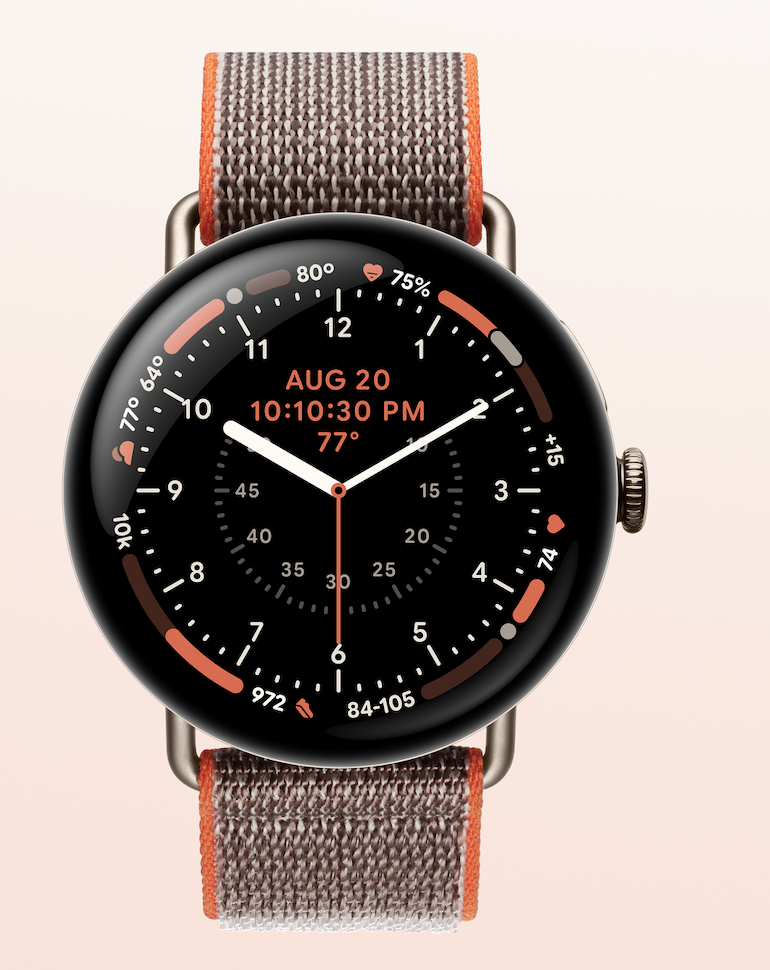
Health Guardian is the umbrella name Google has given to a set of passive sensing features across the Pixel Watch and Fitbit lineup. Two of its components deserve special attention because nothing quite like them exists on a mainstream smartwatch sold in India today.
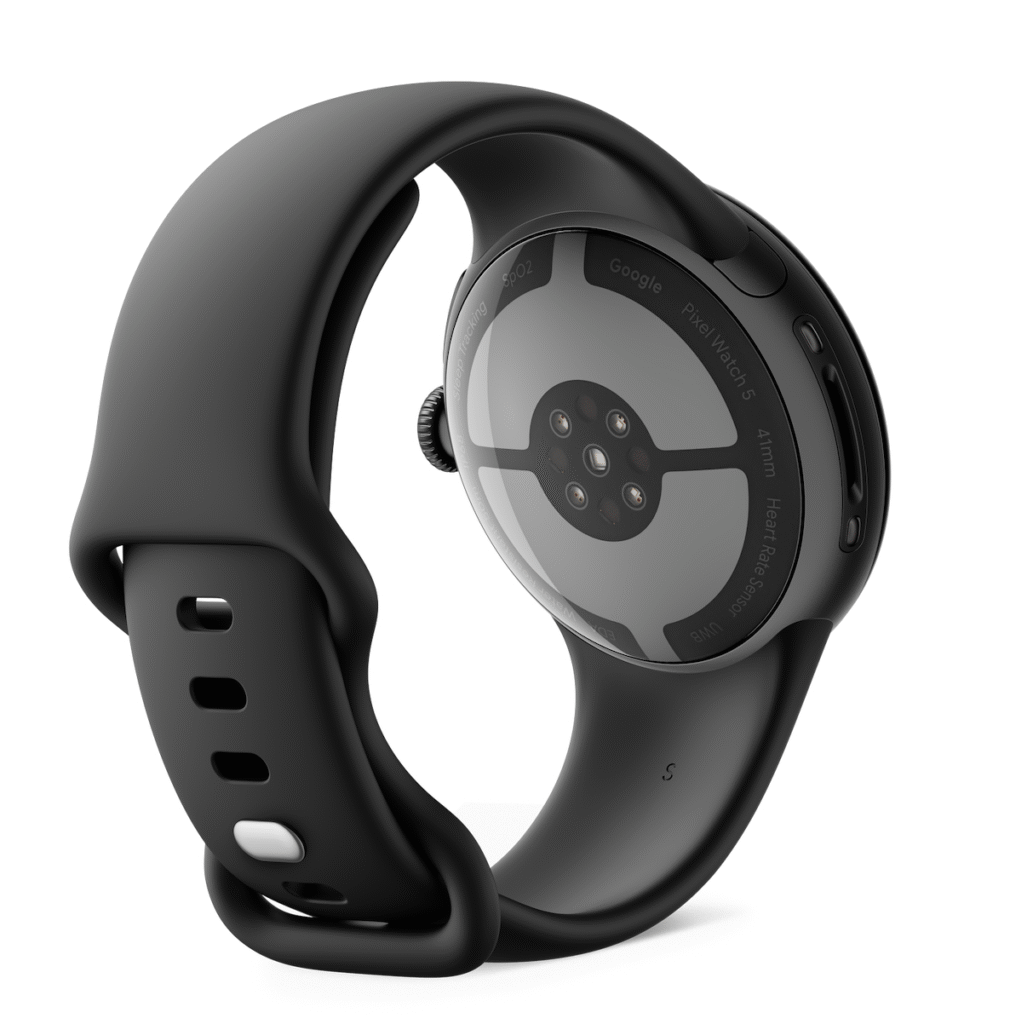
Blood Pressure Trends works by continuously reading your pulse wave shape and how fast that pulse travels under your skin, using the watch’s optical and motion sensors. Instead of pushing a notification every time your numbers shift, which would mostly just report normal daily fluctuation, the watch waits and delivers one summarised insight on the first of each month. If it detects a sustained upward trend, it nudges you to confirm the reading with a traditional cuff-based monitor and suggests lifestyle tweaks around sleep and stress.
Insulin resistance is the second major addition, and it explains something most people never get to see outside a lab. When your body handles glucose efficiently, cells respond quickly to insulin’s signal to absorb sugar from the bloodstream. When resistance builds up, the pancreas has to work harder and pump out more insulin to get the same result, a strain that has no obvious daily symptoms but adds up over months. The Pixel Watch 5 estimates this trend using heart rhythm, sleep, and activity data gathered over a full month, then flags a shift so you can act before it compounds.
Both features are built for general wellness awareness, not diagnosis. Google is explicit that neither tool replaces a doctor’s visit, a lab blood test, or a certified blood pressure monitor, and pregnant users are advised not to rely on either metric. Consider this a heads-up system rather than a substitute for medical care.
Alongside these two, Health Guardian also covers irregular heart rhythm notifications for signs of AFib (atrial fibrillation, an irregular heartbeat pattern), high and low heart rate alerts, sleep breathing quality trends, and loss-of-pulse detection that can trigger an emergency call. Google says blood pressure and insulin resistance trends will begin rolling out to compatible watches this fall, so early buyers in India may need a software update before the feature goes live on their unit.
Design, Display and Battery Life
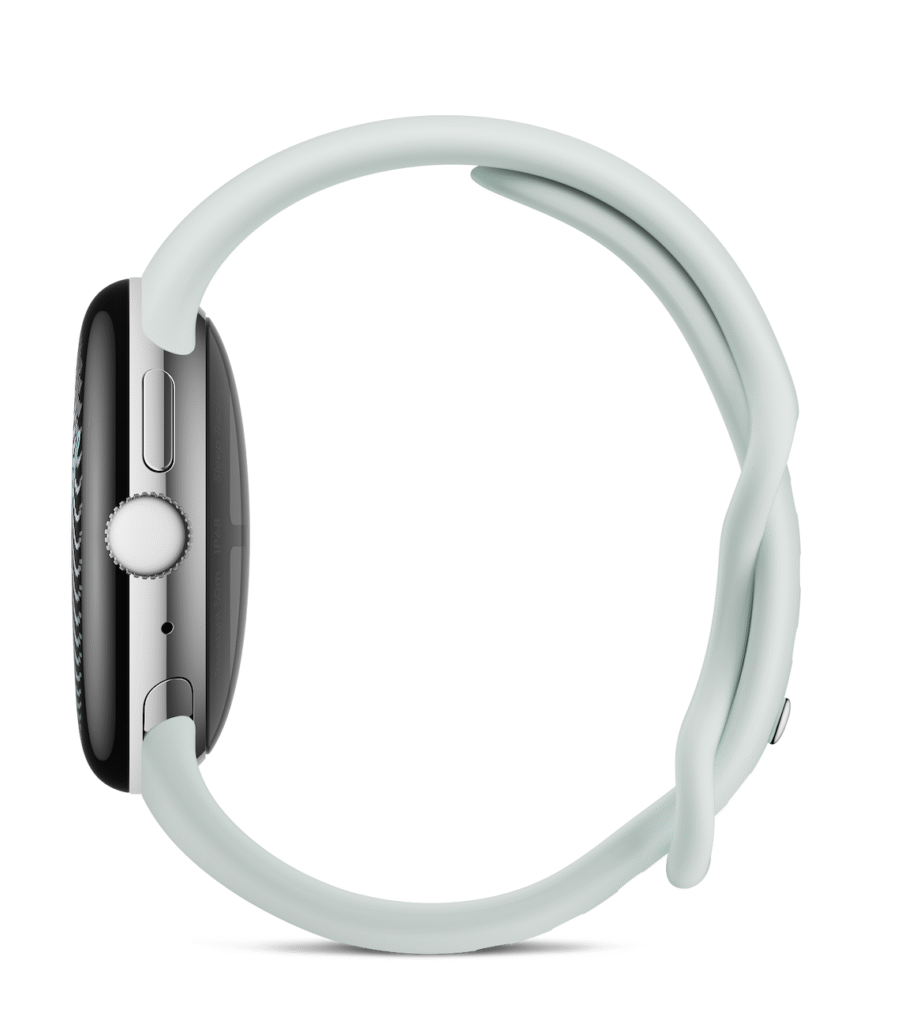
Google has kept the domed Actua 360 display from the Pixel Watch 4, a curved AMOLED panel that now hits up to 3,000 nits of peak brightness, useful for checking your watch under harsh Indian summer sun without squinting. The screen still uses Corning Gorilla Glass 5 for scratch resistance and holds a 320 ppi pixel density with support for an always-on mode.
Battery figures are where the two sizes diverge sharply. The 45mm variant is rated for up to 40 hours with the always-on display active, while the more compact 41mm model manages up to 30 hours under the same settings. Both switch to a longer runtime in Battery Saver mode, and the bundled Quick Charge Dock can take a drained watch to 50 percent in roughly 15 minutes, handy for a quick top-up while you get ready in the morning.
Water resistance is rated at 5 ATM alongside an IP68 certification, so showers, pool laps, and monsoon downpours are not a concern, though Google notes this rating naturally degrades with wear and impact over time.
Performance and Gemini Intelligence
Under the hood sits the Qualcomm Snapdragon W5 Gen 2 Accelerated chip paired with a Cortex-M55 co-processor, the same silicon family as the Pixel Watch 4 but tuned for roughly 20 percent faster overall performance and a 12 percent CPU bump. Storage has also doubled to 64GB.
The bigger shift is software. Gemini, Google’s AI assistant, now runs proactive suggestions directly on the watch face, surfacing things like boarding passes when you land at an airport or the remaining stops on your commute without being asked. A Raise to Talk gesture lets you summon Gemini by lifting your wrist, whether that means starting a workout, setting a timer, or pulling up dinner reservation details buried in an email. Some of these actions work offline too, so a patchy network on the Delhi Metro will not stop you from setting an alarm by voice.
Fitness Tracking: The Biggest Upgrade Beyond Health Guardian
Google is billing this as its largest fitness overhaul to date, built around a Readiness Score that tells you whether to push a hard session or prioritise recovery based on your recent sleep and stress data. The Google Health app lets you build structured strength or interval workouts with specific reps, weights, and rest periods, then sync the plan to your wrist so the watch guides you through each set with audio and visual cues.
Outdoor tracking gets a genuine upgrade too. Google claims 2x more accurate GPS route tracking compared to earlier Pixel Watches, using dual-frequency positioning to hold a steady lock even in dense urban canyons, a real test given how much of Indian city running happens between tall apartment blocks. Sleep tracking has also improved, with Google citing roughly 15 percent better sleep-stage detection accuracy alongside the new Sleep Breathing Quality metric.
Pixel Watch 5 vs Pixel Watch 4: What Actually Changed
If you already own a Pixel Watch 4, the hardware jump here is modest. The table below lays out where the two watches diverge.
| Feature | Pixel Watch 4 | Pixel Watch 5 |
|---|---|---|
| Chip | Snapdragon W5 Gen 2 | Snapdragon W5 Gen 2 Accelerated |
| Storage | 32GB | 64GB |
| Battery (45mm, AOD) | Up to 36 hours | Up to 40 hours |
| GPS accuracy | Baseline | 2x more accurate route tracking |
| Health Guardian suite | Partial | Full, including blood pressure and insulin resistance trends |
| Gemini integration | Basic | Proactive suggestions plus offline actions |
The takeaway is straightforward: this is not a redesign, it is a health and intelligence upgrade layered onto familiar hardware. If your Pixel Watch 4 already serves you well and you do not specifically want the new Health Guardian metrics, there is little urgency to switch.
Our Take
The Pixel Watch 5 is a smartwatch built around a genuinely useful idea: catching slow, invisible health shifts before they become a problem worth worrying about. Blood pressure and insulin resistance trends will not replace a proper check-up, but as an early warning layered onto a watch you already wear, they fill a gap that most fitness trackers ignore entirely.
Combine that with a faster chip, a smarter Gemini layer, and genuinely improved GPS accuracy, and the Rs 42,900 starting price in India feels justified for anyone stepping up from a non-Pixel or ageing smartwatch. Existing Pixel Watch 4 owners, on the other hand, will find less reason to rush.
Explore Pixel Watch bands and accessories on Amazon to personalise your new watch from day one.