
Force Motors plans to invest approximately ₹3,000 crore in manufacturing and capacity expansion, while preparing to expand its electric mobility offering with a Traveller EV range. The company shared these plans in its Q2 and H1 FY2026–27 results update on 28 October 2026. Its output ambition is around 80,000 vehicles, but the release does not give an EV launch date or technical specifications.
Table of contents
₹3,000 Crore Investment and Capacity Plan
Managing Director Prasan Firodia said the proposed investment would strengthen manufacturing capabilities, expand capacity and support the ambition of nearly doubling output to around 80,000 vehicles. This is a future target, not a production level already achieved. The update does not specify a completion date for the investment programme.
Force Motors also reported nil total debt. Alongside its manufacturing plans, the company highlighted Project DigiForce, which is aimed at improving customer engagement, dealer operations and operating efficiency.
Traveller EV: What Is Confirmed
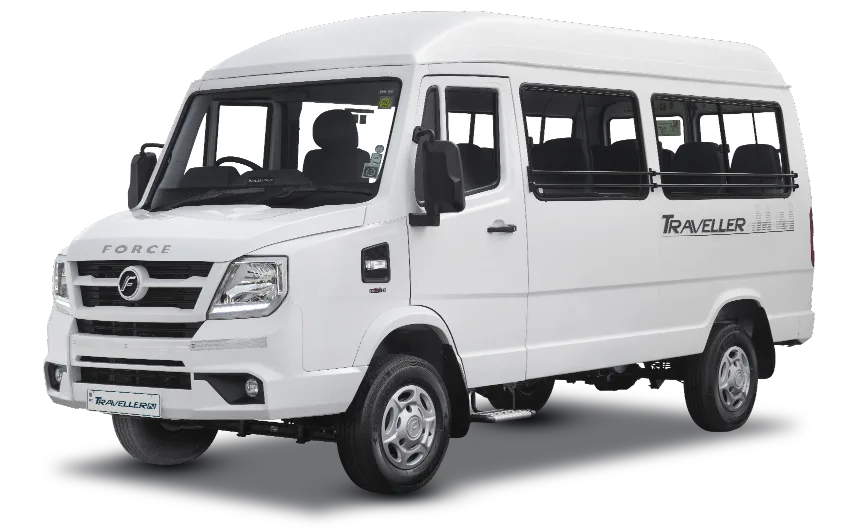
Firodia confirmed that the company is looking forward to launching the Traveller EV range as part of its electric mobility expansion. The update is a statement of product plans rather than a detailed launch announcement.
There is no confirmed launch date, battery capacity, driving range, charging time or price in this release. The Traveller N shown above is the current passenger van; it should not be taken as an image or specification confirmation for the forthcoming EV range.
For fleet buyers, the important details to watch will be the EV variants, passenger capacity, charging requirements and operating costs. Those details will be needed before a meaningful comparison with existing diesel or CNG options can be made.
Q2 and H1 FY2026–27 Results
The financial figures below are standalone results for the quarter and half year ended 30 September 2026. Revenue and profit before tax increased in both periods, while reported profit after tax was lower year on year.
| Measure | Q2 FY2026–27 | YoY | H1 FY2026–27 | YoY |
|---|---|---|---|---|
| Revenue | ₹2,967 crore | 41% | ₹5,445 crore | 23% |
| EBITDA | ₹476 crore | 23% | ₹842 crore | 13% |
| Profit before tax | ₹393 crore | 24% | ₹682 crore | 13% |
| Profit after tax | ₹291 crore | −17% | ₹504 crore | −6% |
The PAT comparison needs context. In Q2 FY2025–26, Force Motors moved to the new tax regime under Section 115BAA and recognised a one-time ₹85.46 crore tax benefit related to deferred tax and MAT credit. The company therefore says the tax expense, PAT and EPS for Q2 and H1 are not directly comparable with the corresponding periods this year.
That distinction matters when reading the reported 17% fall in Q2 PAT and 6% fall in H1 PAT. The declines should not be presented without the previous-year tax benefit, nor should they be described as growth in net profit.
Traveller N and Urbania Deluxe Demand
The company said H1 sales volumes grew 23% year on year. It attributed the early part of the year to operational adjustments during the transition to the Traveller N range and the introduction of Urbania Deluxe, with volumes picking up in the last two months of the first half.
Force Motors reported customer interest and a healthy order pipeline for both products. It also described demand across Trax, Monobus and specialised vehicles as healthy. These are company-reported demand trends, not a separate confirmed sales target.
The Urbania Deluxe launch overview covers the premium shared-mobility model already introduced in July. The latest update adds the capacity investment plan and Traveller EV direction, rather than announcing another Urbania launch.